
THE MILLEGAN MEMO: POST-NOVEMBER 2025
Brought to you by The Woodworth Contrarian Fund
This month we revisit the original oil panic, the whiskey glut nobody noticed, homebuilders’ disappearing margins, the new WORM index for Oregon companies, and the only friend AI data centers really have - natural gas. In other words: 1970s stagflation, a hangover in a bourbon warehouse, housing builders racing each other to the bottom, and an energy transition that still quietly runs on methane. If you like panic, mispricing, and real assets that don’t care about your factor model, you’re in the right place. As a final note, the recent S&P rebalancing saw thirteen companies removed from the S&P 600 small cap index - three of them are current holdings. We like being part of the cast offs. This was even a signal to review each of the others as possible investment targets.
— Managing Partners Drew Millegan & Quinn Millegan
“Only when the tide goes out do you discover who’s been swimming naked.”


LISTEN TO THE MILLEGAN BROTHERS TODAY ON THE CAPITAL CALL PODCAST
(In a hiatus, but lookout for our next season down the road)
Announcing Woodworth’s Oregon Market Index, The WORM: Keeping Score on Oregon, Inc

We are formally releasing the Woodworth Oregon Market Index (WORM), our simple, equal weight scoreboard for Oregon’s public markets. To calculate it, we take the price of one share of each Oregon-exposed company in the index, add them up, divide by the number of companies, and multiply by 100. The result is a single number that tells you, at a glance, whether the average Oregon name is grinding higher, stuck in the mud, or rolling downhill in unison, without letting any one giant dominate the picture.
WORM 12/9/2025 END OF DAY CLOSE - 3,408.71
Follow Woodworth on X for pricing updates after the close each day
We think WORM is an interesting way to keep score on the real Oregon economy instead of just watching the S&P and pretending Nike is the whole story. It puts regional banks, industrials, chip designers, and hometown consumer brands on the same footing and lets you see how “Oregon Inc.” is actually doing beneath the headlines. Our recent deep dive on Willamette Valley Vineyards (WVVI) is a good example of why this matters - Willamette Valley Vineyards (WVVI): Not-So-Great Value? got enough traction to be picked up by WineBusiness.com, which tells us there is appetite for sober local analysis that is not just cheerleading. We saw an inordinate amount of folks blowing up our phone about WVVI after that pickup.
You can read the original piece here:
https://www.woodworth.fund/news/willamette-valley-vineyards-wvvi-not-so-great-value
And the WineBusiness pickup here:
https://www.winebusiness.com/news
November in Economic History:
1973 - The Oil Embargo That Broke Markets and Made Fortunes
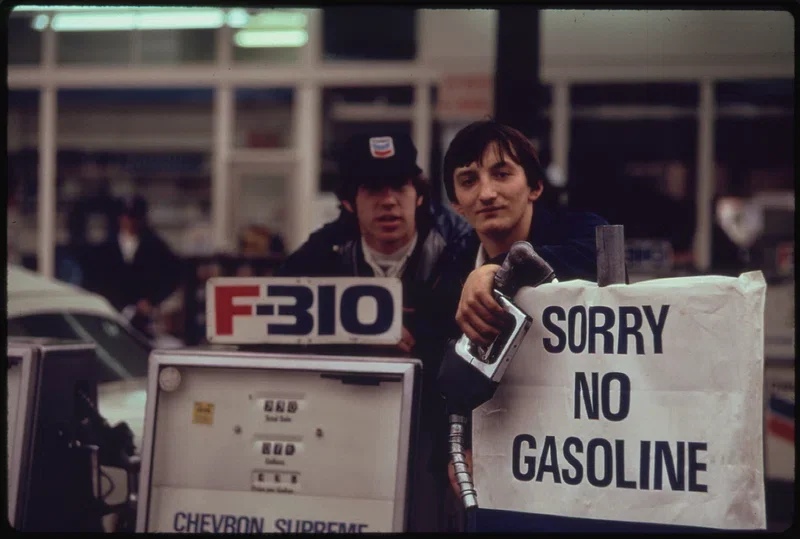
Gas Station Attendants Peer over Their "Out of Gas" Sign in Portland, on Day before the State's Requested Saturday Closure of Gasoline Stations 11/1973. Photographer: Falconer, David. Original public domain image
The 1973–74 OPEC embargo remains one of the purest examples of how markets misprice the duration of crises. In late 1973, Arab oil producers cut output and embargoed shipments to the U.S. and several allies in response to the Yom Kippur War. Between 1973 and 1974, the nominal price of oil roughly quadrupled from about $3 to nearly $12 per barrel, and the Dow suffered what contemporaries called the seventh-worst bear market in its history.
The shock rippled straight into the real economy. U.S. gasoline prices jumped from roughly 39 cents per gallon in 1973 to about 54 cents in 1974 and continued climbing later in the decade, while early estimates put job losses near 500,000 and the hit to GNP in the $10–20 billion range from the energy shock and associated recession. The result was “stagflation”: a mix of high inflation and weak growth that became the defining macro backdrop of the 1970s.
The contrarian lesson from 1973 isn’t that energy crises are permanent - none of them are. It’s that markets reliably overestimate how long the panic will last and underestimate how fast humans adapt. The embargo helped catalyze a series of structural responses: Nixon’s “Project Independence,” the Energy Policy and Conservation Act (which created the Strategic Petroleum Reserve and fuel-economy standards), and a renewed push into nuclear and other non-OPEC sources. Churchill’s line - “Safety and certainty in oil lie in variety and variety alone” - effectively became energy policy.
The companies that diversified supply, improved efficiency, and invested in new extraction technologies didn’t just survive; they compounded at extraordinary rates across the next decade. In 1973, the market priced in permanent disruption to energy and energy-adjacent businesses. In hindsight, it priced one of the great buying opportunities of the 20th century.
Whiskey on Sale - Why MGPI’s Barrels Are the Bargain
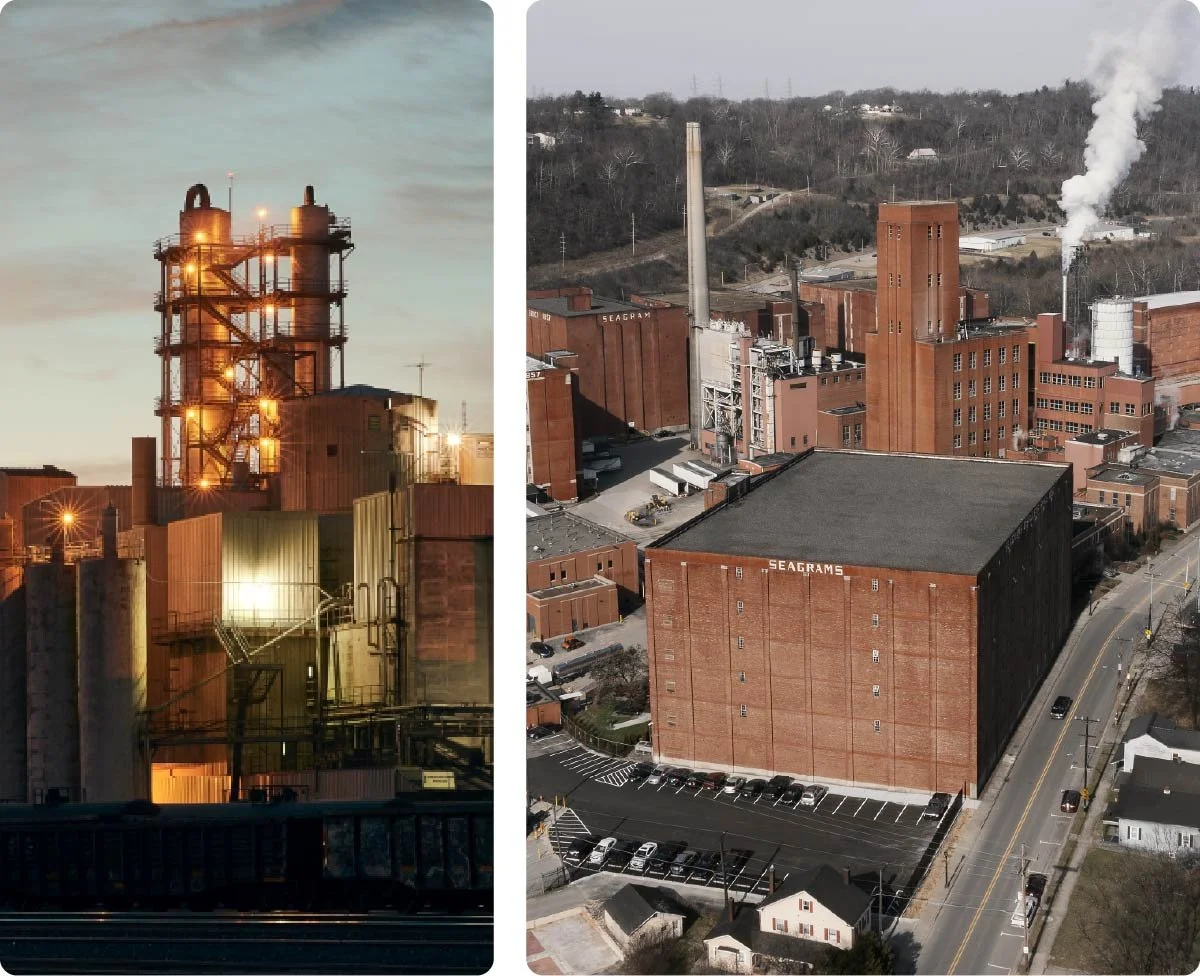
MGPI’s setup as an investment starts with a cyclical earnings hit sitting on top of a large, tangible asset base. In Q3 2024, MGP Ingredients reported net sales down roughly 24% year over year to about $161.5 million, with its Distilling Solutions segment down around 36% and brown-goods sales in that segment down more than 20%, even as consolidated gross margin rose to roughly 40 percent on the back of stronger branded-spirits mix and pricing discipline. On the balance sheet, MGPI carries inventory in the mid-$300 millions and more than $320 million of property, plant and equipment on a total asset base around $1.4 billion, supported by several hundred million dollars of shareholders’ equity. The stock now trades in the mid-$20s after roughly a 70–75 percent drawdown from its recent peak, while Street targets in the high-$30s to low-$40s imply substantial upside if earnings normalize and the barrel inventory is ultimately monetized at anything close to replacement value.
The narrative weighing on that asset base is that Gen Z is not drinking and that brown spirits are structurally broken - but the spending data suggest something very different and directly relevant to MGPI. Younger legal-drinking-age consumers appear to drink slightly less often, yet they devote a similar share of their income to alcohol as millennials did at the same life stage, and when they do spend they are trading up into higher quality, higher priced products rather than chasing cheap volume. That combination of premiumization and lower frequency means a properly aged, higher-end bourbon looks more like a scarce luxury good than a commodity, especially as Gen Z incomes rise. If that is right, MGPI’s current earnings air pocket and whiskey overhang are timing issues, not terminal ones: the rackhouses full of aging bourbon are effectively a portfolio of call options on future demand from cohorts who already prefer drinking better, not cheaper. In our full piece - The Kingdom of Brown Goods: Why MGPI Is Being Crushed by Inventory & Primed for Resurrection - we walk through this misperception, the inventory math, and the path from today’s panic pricing to a more rational valuation.
Please note that the Woodworth Contrarian Stock & Bond Fund, LP, of which the Millegan Brothers manage and are invested in, currently hold a position of MGPI as of the publication date of this article. They may or may not choose to modify their exposure to this name for any reason at any time. This is not a recommendation to buy or sell MGPI or any other name - investments incur significant risk, our risk tolerance may be significantly higher than the average investor, and any discussion in this article does not take into consideration your individual circumstances.
Homebuilders Cut Prices, Sellers Pull Listings, Reality Blinks First

Public builders are already cutting prices on new homes while existing-home sellers are more likely to pull listings than admit prices have fallen. The latest NAHB survey shows roughly 4 in 10 builders cutting prices on new homes, a post-Covid high, with average discounts around 6% and about two-thirds of builders layering on sales incentives like mortgage-rate buydowns to keep deals alive. At the same time, resale sellers are doing almost the opposite: nearly 85,000 U.S. home listings were pulled off the market in September alone, up roughly 28% year over year and the highest tally for any September in close to a decade. Around 5.5% of all listings were delisted, many after 60–100 days of sitting stale, and Redfin notes that a growing share of owners would rather yank the listing than cut the price. Overlay that on top of builder margin compression - Lennar’s homebuilding margin sliding from the low-20s to the high-teens - and tariff and fee structures that still add roughly $10,000–11,000 in cost to a typical new home, and you have a market where the only players truly marking to reality are the people who have to move inventory every quarter.
That split between a marked-to-market new-home complex and a resale market still anchored to 2021 Zillow screenshots looks more like a structural break than a passing Fed-cycle hiccup. Builders are telling you in real time what the clearing price of shelter is - via discounts, incentives, and thinner margins - while existing homeowners cling to yesterday’s comps and simply disappear from the market when buyers balk. That is a recipe for a long, grindy repricing of the entire housing value chain rather than a quick reset that lower rates can magically fix. In that world, the blunt trade is probably not “buy every homebuilder”; the more interesting targets are the assets and suppliers that get mispriced when the industry digests this new margin structure - land options underwritten to old economics, input producers that have been over-punished, or niche builders and operators with genuinely differentiated cost bases who can live with a thinner but more realistic spread.
AI’s Best Friend Still Burns Methane

Fundamentals in natural gas now combine depressed spot prices, underinvestment in supply, and rapidly growing power demand from AI and data centers. Henry Hub spot prices have averaged in the mid-$2s per MMBtu in 2024 after a severe post-COVID bust, and current government forecasts have U.S. benchmark prices rising into the low-$3s in 2025 and mid-$3s by 2026, roughly a 30-40% increase from 2024 levels - not spectacular in absolute terms, but a meaningful turn from today’s depressed base. Upstream oil and gas investment remains well below last decade’s peak, with global spending on upstream projects still down roughly a third from the $800-900 billion highs of the mid-2010s even after a modest post-2020 recovery. Against that under-investment backdrop, AI and data centers are quietly becoming one of the most important incremental power loads in the system, with recent studies suggesting that U.S. data centers could require on the order of 40-70+ gigawatts of additional power capacity by the late 2020s - roughly the equivalent of dozens of large power plants. Several utilities in Virginia, the Carolinas, Georgia and other regions have already proposed new gas-fired units or gas-heavy generation plans explicitly tied to data center growth, reflecting gas’s role as the default firming resource behind intermittent renewables.
Those fundamentals set up a classic contrarian trade where maligned gas equities may be the only scalable bridge between the energy transition story and physical reality. Natural-gas producers and midstream names still sit in the ESG penalty box, banks face pressure to limit fossil-fuel exposure, and management teams often prioritize buybacks and dividends over aggressive growth, all of which constrain future supply just as structural demand starts to inflect. The result is the kind of setup we like to see - bearish sentiment, under-built supply, and a new structural demand source that most models still underweight. The exact timing is always uncertain, but if AI and electrification keep compounding, someone has to supply the firm power. For now, in most grids, natural gas is still the only resource that can scale fast enough to close that gap.
DON’T FOLLOW THE CROWD. CALL US TODAY & INVEST CONTRARIAN.
If you’re seeking liquid access to institutional insights within a hands-on managed, direct investment portfolio featuring differentiated strategies, the Woodworth Contrarian Fund is open to new capital. We prioritize personalized service and building lasting relationships with our investors — because your goals deserve tailored attention and transparent communication.
Ready to explore how our contrarian approach can complement your portfolio? Reach out directly to our team for detailed fund information, eligibility for accredited investors, and next steps.
Stay informed by subscribing to the Millegan Memo and listening to the Capital Call podcast, where we share timely perspectives and in-depth market analysis.
Your next investment opportunity begins with a conversation — contact us today to learn more.
DEEP ROOTS. STUBBORN GROWTH. OREGON-BASED.
Now is a great time to diversify your portfolio with an investment into an award-winning fund. Call us or visit our website to inquire on an investment today in the Woodworth Contrarian Fund as an accredited investor.
(800) 651-1996 - info@woodworth.fund - www.Woodworth.Fund
Contrarian Value-Based Hedge Fund of the Year 2022-2024

Quinn Millegan (left) & Drew Millegan (right)
About the Managers: Brothers Drew Millegan and Quinn Millegan manage the Woodworth Contrarian Stock & Bond Fund, a hedge fund based in McMinnville, Oregon. They grew up in the finance world, and specialize in contrarian investment strategies in the US Public and Private markets.
Something missing from your portfolio may be a diversification into the Woodworth Contrarian Fund for accredited investors. Now is a great time to diversify your portfolio with an investment into a multi-award-winning fund. An exposure to a value-based contrarian strategy is a unique opportunity for your long term capital that you’re seeking aggressive returns for. With nine years of the Woodworth Fund under management, the Millegan Brothers are trained stock-pickers and experienced venture capital investors with a proven track record. Give us a call today to discuss a liquid investment with independent administration and independently audited monthly statements and a personal relationship.
