
STEPPING INTO VALUE WITH SHOE STATION (NASDAQ:SHOE)
Brought to you by Drew Millegan & The Woodworth Contrarian Fund

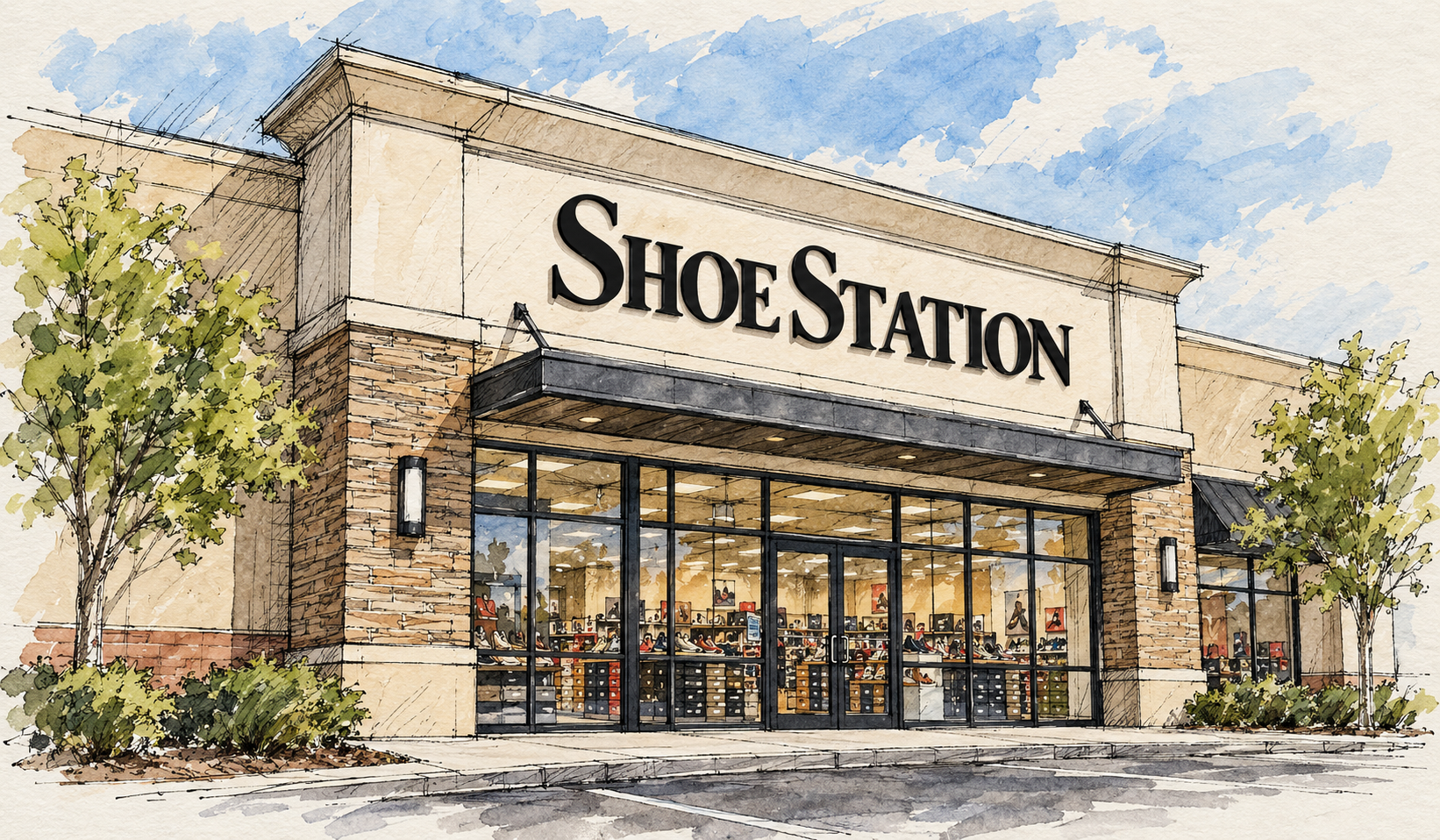
For value investors, it’s sometimes difficult to discern value traps from true value deals. Sometimes, value isn’t a diamond in the rough, but just another dud of a rock. That isn’t the case with the recently-rebranded Shoe Station, formerly known as Shoe Carnival. The company, having $2.44 of free cashflow and trading at less than 60% of its tangible book value (that’s actual real assets minus intangibles like IP and Goodwill), is also in the midst of a transition to take better advantage of differences in local taste, as well as optimizing their inventory turnover following an accretive recent acquisition.
Oh, and did we mention that the company has no long-term debt and is long-term committed to paying out a $0.17/share quarterly dividend (over 5% yield)? SHOE has all the hallmarks of a classically undervalued contrarian buy at these levels no matter the current market uncertainty.
Here is our breakdown of why, following their Q2 2026 financial release.
Q2 2026: Liquidations and Localization
Shoe Station’s second quarter of 2026 was undeniably challenged by a difficult consumer environment, which is why the stock is down. The top and bottom lines both saw contractions compared to the same period last year:
At first glance, the margin contraction and EPS drop might deter casual observers. However, management made a deliberate, strategic decision to accelerate the liquidation of aged inventory. By accepting lower merchandise margins in the short term, Shoe Station is targeting a $50 million reduction in inventory by year end.
More broadly, Shoe Station has also found that, despite deepening discounts and sales, lower prices do not appear to be stimulating demand from their customers. Instead, the company has opted for a more holistic approach - shifting its focus away from a one size fits all approach to the brands and inventory it holds across different stores. By zeroing in on more local tastes and reacting more nimbly to changes in local preferences, the company aims to enhance its value proposition to its customers. The company stated on their recent earnings call that “back to school is the first evidence that our localized assortment focus is working.” It’s likely the fruits of such a shift will compound with time, meaning this opens up the opportunity for long-term growth flying under the radar of all but the most discerning investors and short-term traders.
A Pristine Balance Sheet: Liquidity Retains an Advantage
In an era where the cost of capital is a primary headwind for consumer discretionary stocks, Shoe Station’s balance sheet exhibits an exceptional level of financial discipline. Though, as with other retailers, the company maintains long-term liabilities in the form of long-term leases, the company is and has managed to completely avoid long-term loans and bank debt.
Shoe Station also ended the quarter with $118.01 million in cash & equivalents ($4.82/share, or around 37% of current market price), plus another $13.63 million in marketable securities. This is a remarkable $39.7 million increase from the same period last year - achieved even while navigating a sales downturn. Furthermore, SHOE maintains $99 million in untouched availability under its $100 million credit facility, providing a massive liquidity buffer (and competitive advantage over its competitors) against future retail shocks.
This means that the company is well positioned to take advantage of unknown opportunities and hedge against unknown risks that traditional investment models may fail or find difficult to incorporate. Even considering its existing long-term liabilities (leases), these are much more flexible than the bottom-line number would suggest, and in the event of financial stress are going to be more easily renegotiated than a bank loan.
Value and Pessimistic Multiples
Shoe Station’s stock is currently priced for pessimism, creating an attractive entry point for value-focused investors. Looking at the most up-to-date multiples:
Trailing P/E Ratio: SHOE currently trades at a trailing price-to-earnings ratio between 12.8x and 15.1x. This represents a notable discount to many competitors in the apparel and footwear retail space such as Zumiez (ZUMZ) or Ross (ROSS), which trade closer to between 20x and 30x.
Forward P/E Ratio: With analysts projecting an earnings rebound (forecasting growth from $0.85 to $1.51 per share next year), the forward multiple sits at a highly constructive ~15.6x. Typical forward price-to-earnings ratios among competitors typically trade closer to 25x.
Debt to Equity: 0%
These multiples suggest that the market is overly focused on the short-term margin compression from Q2’s inventory clearing, rather than the long-term earnings power of a newly optimized, leaner operation.
A Robust, Expanding Dividend
For income investors, SHOE is a quiet powerhouse. The company currently pays an annualized dividend of $0.68 per share ($0.17 quarterly), resulting in a robust dividend yield of over 5%, depending on daily price fluctuations.
More importantly, this isn’t a stagnant yield trap. Shoe Station has increased its dividend for 14 consecutive years, reflecting a deep commitment to returning capital to shareholders. With just 21.5% of its cash flow required to cover the dividend, the payout is highly sustainable - especially given the complete absence of long term debt servicing obligations.
Technicals & Momentum
For value investors, fundamental analysis tells only half the story. To gauge the optimal entry point and manage risk, we can apply the technical analysis methods popularized by Clifford Pistolese in works such as Using Technical Analysis. Pistolese emphasized a disciplined, step-by-step approach to identifying trends, support levels, and volume accumulation to minimize risk before taking a position. Sitting down to dig into a chart like this is good practice for any investor to cover their bases - trading trends and patterns can often reveal trends and events which might otherwise have gone unnoticed, as well as emphasizing which and what kinds of events are more important for a particular company’s stock.
Applying this framework to SHOE’s recent chart action reveals a cautious but opportunistic setup:
Current Trend: SHOE's stock price experienced a notable downtrend throughout the late summer of 2026, recently testing the $12.50 to $13.00 range. Pistolese advises against catching a falling knife; investors should wait for the downward momentum to exhaust itself and for a clear reversal formation or basing pattern to emerge. With the past couple weeks of trading in the rearview mirror, we can start to see the beginnings of this basing pattern.
Support and Resistance: The $12.00 to $12.50 zone represents a critical support level. If the stock holds this line, it validates a potential bottom. Conversely, any short-term rally will face immediate resistance near the $15.50 mark, which was the stock's trading range prior to its late-August drop.
The Bottom Line
(Woodworth Contrarian 2026)
While Q2 2026 numbers reflect a transitional period characterized by aggressive inventory liquidation and product discounting, Shoe Station (SHOE) retains the core traits that define a resilient value investment. A flawless balance sheet with zero debt, $131 million in cash, conservative P/E multiples, and a secure, growing dividend make SHOE a compelling equity for those willing to look past near-term retail headwinds.
At Woodworth, our discipline centers on deep fundamental analysis, contrarian value, and long-term perspective. We do not react to short-term market noise, cyclical bumps, or quarterly guidance resets. By focusing on intrinsic franchise strength, pristine balance sheets, and patient technical entry points, we position ourselves for sustainable outperformance. Accordingly, we believe that SHOE is a buy at current price levels, with a conservative long-term target of $19.50 per share, and expect that we could see price levels as high as $21 to $28 over the next several years.
Disclosure: This analysis is for informational purposes. Position sizing and risk management are essential. Do your own due diligence.
Please note that the Woodworth Contrarian Stock & Bond Fund, LP, of which the Millegan Brothers manage and are invested in, currently holds a position of SHOE as of the publication date of this article. They may or may not choose to modify their exposure to this name for any reason at any time. This is not a recommendation to buy or sell SHOE or any other name - investments incur significant risk, our risk tolerance may be significantly higher than the average investor, and any discussion in this article does not take into consideration your individual circumstances.
DEEP ROOTS. STUBBORN GROWTH. OREGON-BASED.
Now is a great time to diversify your portfolio with an investment into an award-winning fund. Call us or visit our website to inquire on an investment today in the Woodworth Contrarian Fund as an accredited investor.
(800) 651-1996 - info@woodworth.fund - www.Woodworth.Fund
Contrarian Value-Based Hedge Fund of the Year 2022-2026


Quinn Millegan (left) & Drew Millegan (right)
About the Managers: Brothers Drew Millegan and Quinn Millegan manage the Woodworth Contrarian Stock & Bond Fund, a hedge fund based in McMinnville, Oregon. They grew up in the finance world, and specialize in contrarian investment strategies in the US Public and Private markets.
Something missing from your portfolio may be a diversification into the Woodworth Contrarian Fund for accredited investors. Now is a great time to diversify your portfolio with an investment into a multi-award-winning fund. An exposure to a value-based contrarian strategy is a unique opportunity for your long term capital that you’re seeking aggressive returns for. With ten years of the Woodworth Fund under management, the Millegan Brothers are trained stock-pickers and experienced venture capital investors with a proven track record. Give us a call today to discuss a liquid investment with independent administration and independently audited monthly statements and a personal relationship.
